Home Blog Page 19

Before Sunrise (1995) review

0
"Oh, so you're planning on keeping the beard?"
“Oh, so you’re planning on keeping the beard?”

Twitter Plot Summary: An American man and a French woman meet on a train and, finding they get along, jump off and have a long conversation in Vienna.

A brace of strangers, Ethan Hawke and Julie Delpy, get talking on a train and, realising they have a bond, decide to spend the day together exploring Vienna. It’s not an everyday occurrence for sure, and likely not something that most people would spontaneously do, all things considered. Yet without it we wouldn’t have a story, nor would we have what is perhaps a near perfect film covering the intricacies of relationships and young love. There was a bit of sick in my mouth writing that. Ugh. Let’s move on.

Before Sunrise sets off on a deep character inspection, combining great performances from Hawke and Delpy with a smart script and superb direction from Richard Linklater. The various intricacies of relationships and life are explored in a very focused and targeted way, aided mostly by the natural rhythm to the dialogue. There’s little razzle dazzle to the cinematography or the presentation – it’s all as naturalistic as possible. It’s also pretty much two people talking to each other, with little else in the way of drama or action, for want of a better term, that you might see elsewhere.

What we get in place of the usual movie story beats are deep character studies of both Hawke’s Jesse and Delpy’s Celine, exposing their thoughts and their views of the world through engaging dialogue and the desire from both parties to explore the other’s thoughts. The transient nature of their encounter leads to a much more heartfelt and deep conversation than they and the audience perhaps thought possible

Voyeurism was overrated, but still highly entertaining on a zero budget.

To say that their conversations lack dramatic tension would however be a great disservice to the story, the performances and the production. And to call Before Sunrise anything less than compelling would be a grave error. Through a combination of all of these elements it becomes less a movie and more like a window into a very real conversation, the camera watching their journey across Vienna like an invisible voyeur. Saying it like that feels a little on the seedy side, but that’s the setup, kids.

Their brief encounter takes place over the course of one evening as they traverse the streets and briefly touch the lives of others in a manner that is almost as fleeting as their own interactions. The metaphors keep stacking up – both of them are strangers in a strange land, and strangers to one another, meeting strangers as they walk from place to place. Much like real life, potential plot threads are raised but are not necessarily explored. They wander and meander, consider going to a theatrical performance, encounter various lives in the city but, ultimately, are lost in their very direct and personal conversation.

The journey ends with the promise of a future meeting in 6 months time. No numbers or contact details are exchanged, just a promise to somebody you’ve only just met that you’re going to show up in six months time. If that isn’t a perfect metaphor for the fleeting nature of young love then I don’t know what else to say. Marigold. Okay, so perhaps I do.

Score: 5/5

Hellboy II: The Golden Army (2008)

0
"I don't look daft in these do I?"
“I don’t look daft in these do I?”

Twitter Plot Summary: Hellboy and the BPRD are back, this time taking on a prince who rules over the land of fantasy and wishes to destroy humanity. No pressure.

We should consider ourselves lucky that Hellboy 2 ever got made. The first film, whilst incredibly competent and respectful towards Mike Mignola’s source material, didn’t make a huge impression outside of the relatively small comic book film audience of the time. But then Guillermo del Toro went and made Pan’s Labyrinth which made a lot more money and gave him carte blanche to work on any project of his choosing. So, as a fan of the Hellboy comics he was allowed to work on a sequel to his 2004 film.

The Golden Army is a story that doesn’t draw influence from Mignola’s comics and instead embraces the world of fantasy along a similar line to Pan’s Labyrinth. It’s tribute to del Toro’s visual aesthetic and the brilliance of the Hellboy character that slamming those two worlds together works very well indeed rather than being the film equivalent of mixing oil and water. Taking place some time after the events of the first film, The Golden Army sees Prince Nuada (Luke Goss) declaring war on humanity from the realm of fantasy, and it’s up to the B.P.R.D. to step in and save the day.

Doug Jones returns as Abe Sapien, but this time is given opportunity to use his own voice rather than being dubbed by Frasier’s David Hyde Pierce. This small change goes by barely unnoticed, and allows Jones to fully inhabit the character. It’s a good move too, especially given the extended role that Abe has in this story and his relationship with Nuada’s twin sister, Nuala.

del Toro has put together a story that is not only rich in action but also rich in characterisation. Hellboy, a typically reliable performance from Ron Perlman, is frustrated about his good deeds not being recognised by the world at large and having to work in the shadows, and apart from the threat to humanity’s existence there are relationship matters to contend with. This side of the story is played well by Selma Blair as Liz, although given the creative team involved it goes without saying that she is not a damsel in distress and, ignoring her relationship with Hellboy, plays an equal role in events.

"Ohhh myyyy...."
“Ohhh myyyy….”

There is clearly a debt owed to the likes of Labyrinth and The Dark Crystal in the production design, in particular the visit to the troll market. This is a sequence rife with interesting characters and an example of life in the other realm.

And who can ignore the presence of Johann Kraus, voiced by Family Guy/American Dad creator Seth McFarlane? The ghost medium is a superb counterpoint to Abe, Liz and Hellboy’s usual methods, but also bringing something new and exciting to the team dynamic. Not to say that Rubert Evans’ John Myers didn’t have a similar sort of impact in the first film, but it’s clear that his presence there was to serve the plot and it’s understandable why the character didn’t return for this sequel.

The Golden Army succeeds by establishing a different tone to the original film but keeping the journey of the characters true to the template. It’s a pity that there doesn’t appear to be widespread appeal for the characters to return to our screens, you’re unlikely to get a better mix of big budget action and characterisation in a major studio film.

Score: 3.5/5

Fantastic Four (2015)

0
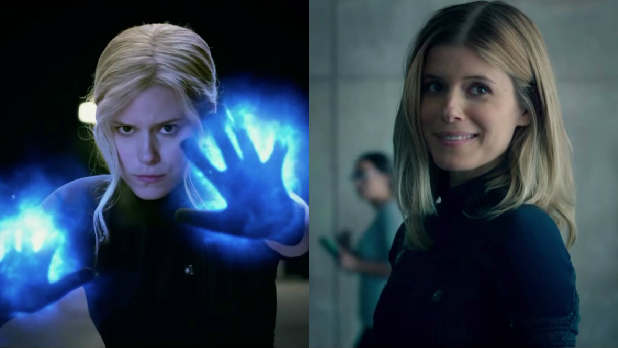
He reached desperately for the device that would bring this movie universe to its inevitable end.

Twitter Plot Summary: The Fantastic Four get a darker, grittier reboot that somehow manages to be worse than the ones with Jessica Alba.

Without wanting to jump on the tide of negative press about Fantastic Four, having now seen the film I feel as though I must. It’s with no great delight that I have joined in with dubbing the film Fantastic Bore. The attempts to provide a more serious superhero movie a la Christopher Nolan’s Dark Knight trilogy have resulted in a film that isn’t very good, plain and simple. I’m not going to blame Josh Trank or the writers Simon Kinberg and Jeremy Slater for that, instead I will throw much of the blame on the studio and the reshoots that were ordered.

This isn’t the first attempt at bringing Marvel’s first family to the big screen. Ignoring the rather awful Roger Corman effort, Fox have previously released two big budget films starring Ioan Gruffudd, Jessica Alba, Chris Evans and Michael Chiklis. They managed two films out of that horrible mess of product placement, but at least they were kind of fun in their own, heavy advertising way. By comparison this interpretation of the Fantastic Four strips away all of the fun and reduces the plot to a dour narrative where barely anyone is seen outside an equally dour government facility, the villain isn’t given nearly enough to do nor an evil plan that makes sense, and the four lead characters are bordering on ciphers. To say they all lack personality is the biggest problem and the most galling mistake they could have made.

The racial reassignment of Johnny Storm into the form of Michael B Jordan is a non-point – anybody who has issues with characters being recast as a different race or gender really need to get a grip. Rather than griping about a previously white character now being black, what they should instead focus on is that the character – indeed, all the characters – are not served in a particularly flattering light. Without wanting to labour the flame based puns, there is a spark of the Johnny Storm we all know and love, but that’s all it is. A spark. Ben Grimm, aka The Thing, spends most of his screen time looking depressed. Aside from a brief horror moment where his new rock-based form is revealed, his only other real contribution to the plot is to shout “It’s clobberin’ time!” somewhat ironically in the film’s final set piece, and to punch things.

About as good as it gets. And lasts for five minutes.

Reed Richards (Miles Teller) and Sue Storm (Kate Mara) fare little better. Teller gives Reed a certain degree of enjoyably nerdy behaviour, but he’s rarely given opportunity to demonstrate exactly what it is that makes him such a scientific genius. Sue is equally badly served, apparently a voice of reason yet that is lost in translation somewhere amongst the rewrites and reshoots. It’s probably hidden under her awful wig.

What it amounts to is a supreme waste of talent of all those involved. Everything that made Miles Teller such a standout star in Whiplash, that made Kate Mara a hot property in House of Cards, that set Josh Trank out as a director to watch after the rather excellent Chronicle, this film puts all of that to one side and quietly forgets about it. You would think on face value that they weren’t very good in the first place. This is incorrect of course, but Fantastic Four does create these doubts regardless.

When the only good thing you have to say about a film is that the special effects look half decent, you know you’re in trouble. Now it seems to be a question of how long it will be before Marvel recoup the rights to their characters and bring them into the Marvel Studios fold.

Score: 2/5

Be selfish about your writing time

0

I am in the somewhat enviable position of being able to dictate my own writing time. I have no responsibilities beyond the day job and occasionally meeting with friends and family. Otherwise, I am a man of leisure and can write whenever I please. This little intro is being written 1am local time, for example. Now that’s dedication to the cause.

The same can’t be said for all people with an interest in writing. Some have jobs that take up a lot of time and energy – fair enough. Others have families to raise or look after, further limiting their downtime. Again, fair enough. Looking after children is a full time job in itself, and I have all the respect in the world for anybody who is in this position. More so if they also manage to churn out a novel or manage to do something creative at the same time.

I have less sympathy for those that say they never have time for writing, and yet don’t ever make the effort to fit it in. Even a snatched five minutes here and there will soon add up to something more substantial over time. Lack of spare time is never a genuine reason, in my opinion, for not writing. If you want to write then you will do so. You are a writer or you are not. There is no middle ground.

So for anyone and everyone who wants to write that book they’ve always had inside them; or wants to write a journal to help them process their days; or any other writing project under the sun – just do it. Be selfish about your writing time. Make it happen, however you see fit. Snatch that five minutes, or better yet allocate a certain amount of time each day for writing and nothing else. Separate yourself from your friends and family and dedicate yourself completely to the task at hand.

Again, I’ve been lucky in the last couple of years that I’ve not had to argue with anybody over my writing time, but I understand and appreciate that not everybody is in the same boat. In essence, if they truly respect your need for writing time then they will understand and leave you to it. Just don’t become a complete hermit, that’s not a good idea.

And if those daily writing sessions don’t always bear fruit, don’t worry. Once you’ve been doing it for a while you’ll soon get to grips with each session. Eventually your word count will increase and will more than make up for those days where nothing seemed to work. Trust me, I can speak from experience on this one. I am my own worst critic, and I’ll never be satisfied until I have written up every single idea that’s buzzing around inside my head. So it goes.

Anyway, this isn’t about me – it’s about you lovely people out there. Your writing time is precious. Make the most of it.

American Ultra (2015)

0
He was an absolute nightmare in the kitchen.

Twitter Plot Summary: A stoner discovers that he is a sleeper agent for the US government, and they now want to kill him.

At its core American Ultra is a fun concept. While much of this fun is played out on screen, along with lashings of blood and violence, it doesn’t quite manage to hit the mark in many respects. That’s not to say it doesn’t entertain, because it does. My complaint is that it could have been even better.

Jesse Eisenberg and Kristen Stewart work very well together. That’s probably why they have made three films together to date. That partnership bears fruit in this collaboration. They come across as the perfect stoner couple, Mike and Phoebe, dedicated to each other despite his panic attacks and inability to leave town as a result. Instead they remain in their small town setting, him dreaming of one day being able to get out there and see the world while drawing a comic book about his creation, Apollo Ape.

Slowly the layers are unpeeled to reveal that Mike is actually a sleeper agent for the US government, who have decided that he is no longer worth retaining and intend to have him bumped off.

While I don’t consider this a spoiler in any way (but some might, so either brace yourself or go and watch the film first), it was nice to see forgotten actor Bill Pullman show up in a brief cameo length role. At the other end of the spectrum is John Leguizamo. I always appreciate his involvement in any film, but here he felt underused. Just when you think he’s going to make a decent contribution to the plot… he doesn’t.

Put to better use are Connie Britton and Topher Grace as the two warring government agents. She wants to see Mike go free whereas he is intent on taking him down before he becomes a threat. This sets the scene for a team of similar sleeper agent types to be sent into the town, among them an always reliable Walton Goggins, to ensure Mike doesn’t get out of there alive.

"This is nothing - I've spent more than my fair share of time around werewolves and vampires."
“This is nothing – I’ve spent more than my fair share of time around werewolves and vampires.”

Grace in particular gets to deliver some superb dialogue and it’s clear that writer Max Landis relished putting words into his villain’s mouth. He no doubt had fun in setting up the action sequences too. Where else would you see somebody killed by a spoon to the eye?

There are good character moments interspersed with some equally good action sequences. Watching Mike processing tactical maneouvres in slow motion is a nice touch and proves to be a solid counterpoint to the “real time” enactment of his plan that follows. His relationship with Phoebe, meanwhile, develops nicely as you soon realise that there’s a bit more to it than you first expect.

Despite my issues with how things ultimately play out, American Ultra deserves praise for being an original concept, as far as can be expected in this age of ideas, in a sea of returning franchises and adaptations. Its problems lie in that it perhaps doesn’t push its ideas far enough, or even that it suffers from having potentially received cuts in order to bring it down to a more box office friendly rating. Whichever way you look at it, it’s a nice idea let down by a few relatively minor missteps.

Score: 3.5/5

Short Story: Man’s Best Friend, Zombie’s Worst Enemy

0

Another Friday, another short story! This one is a little different, and based on an idea that occurred to me a couple of days ago. I may revisit this at some point, but for now… enjoy.


When the dead had started returning from their graves, former army Sergeant Jim Fowler was prepared. Not only did he have a fully stocked weapons cabinet, but his Alsatian Brutus was also up to the task of taking down a zombie or two. Fowler had taught Brutus well, raising him from a pup to attack the undead. He would target their limbs first, disabling the zombie and limiting its movements. Then, Fowler would step in and finish off the corpse with a blow to the head. Brutus was capable of the same, using a combination of paw strikes and bites. These days Brutus was able to kill a zombie outright with no interference from Fowler. He had trained his dog well.

They were a team, Fowler and Brutus. They acted as one, more a partnership than a master and his pet.

Months passed with barely any contact with other survivors. Fowler was beginning to wonder if anybody else had made it through the apocalypse. Despite their best efforts, Fowler knew that, eventually, fate would play its hand. And so it did.

It was a routine scavenge for supplies, one that they had undertaken hundreds of times before. This one held a hidden surprise. A zombie, one that had lay dormant since the outbreak began, was awoken by Fowler’s search. Fowler decapitated the undead creature, but not before it had taken a bite out of his neck.

Fowler withdrew his hand and stared at the blood covering it. How could he have been so stupid! It was a rookie error, no two ways about it. He looked at Brutus who tilted his head sideways in response.

“I got bit, I’m sorry boy.” said Fowler, fussing the dog with his unbloodied hand. There wasn’t much else to do now except wait for the inevitable.

As the days passed he grew weaker and weaker until eventually he wasn’t even fit enough to take Brutus out every day on patrol. The dog was dedicated to him, yes, but as Fowler’s condition worsened Brutus became more distant. It was as if he could smell the disease working its way through Fowler’s veins. Fowler couldn’t blame him. The one time Brutus came close enough to be petted, Fowler patted him on the head and managed to say “good boy” before the coughing wracked his body and Brutus retreated to his corner.

After almost a week of illness, Fowler died. Throughout, Brutus watched him dispassionately. Brutus knew precisely what had happened to his master. No, former master. The bite had infected the man, and there was nothing Brutus could have done to either prevent it or help the dying man in his final hours. So he had watched, and waited. When the end had came, a few ragged breaths and then silence, Brutus had known exactly what needed to be done.

As Fowler’s resurrected corpse opened its eyes and looked at his former pet, there was a hint of recognition between them, just for a second.

Then Brutus did what he had been trained to do. He killed the zombie.

His jaw dripping with blood, Brutus made his way to the hole in the wall he had made months ago. He had managed to keep it secret from Fowler, although he was sure his former master would have understood Brutus’ reasons for doing so.

Pushing the plasterboard to one side with his snout, Brutus entered the tunnel and emerged into the daylight a few minutes later. He was sad about the man’s death, but life went on. On the breeze he caught a scent, that of another survivor. With nowhere else to go, he set off in that direction. Hopefully, they would prove to be at least half as competent as Fowler.

The Mummy Returns (2001)

0
"I am a scary tiger! Rarrr!"
“I am a scary tiger! Rarrr!”

Twitter Plot Summary: Everybody returns for more action mayhem involving the resurrected Imhotep and a bad CGI Scorpion King.

The reboot of The Mummy in 1999 proved to be a successful endeavour, mixing up an old-school adventure film with modern effects and, in particular, computer generated imagery.

The Mummy Returns proves to be another example of a sequel providing more of the same, but with a bigger effects budget and a far greater use of slightly dodgy CGI. The pinnacle of this is the badly animated face of Dwayne “The Rock” Johnson as the Scorpion King, although he clearly did enough to impress the studio given that he was awarded his own spin-off prequel film. Amazing when considering how little he was given to do here.

The principle cast from the first film return, including Brendan Fraser as Indiana Jones-esque adventurer Rick O’Connell, Rachel Weisz as Egyptian expert Evy, John Hannah as her dippy brother Jonathan, and even Arnold Vosloo’s Imhotep, the titular Mummy, manages to sneak his way out of the afterlife and into the plot. Relations have developed between Rick and Evy to the point where they now have a young son who proves to be an enjoyable character and not in the least bit annoying. Well done to Freddie Boath as their son Alex for not being the least bit annoying.

It’s often the case that a sequel goes bigger and louder in order to look more impressive than the original, and while that is partially the case here (namely the bigger and louder part) it is a much less competent production because other than the new family dynamic it all but copies the structure of the first film and tacks on a rather silly new element where Evy is the reincarnation of a rival to Anck-Su-Namun (Patricia Velasquez), the main squeeze of Imhotep back in the day and since reincarnated in a lady called Meela. That’s as far as the plot really extends, because otherwise it’s just a string of action sequences linked by Egyptian imagery.

They were all aghast at the Scorpion King's bad CGI face.
They were all aghast at the Scorpion King’s bad CGI face.

At least the action never lets up, because otherwise the logical and logistical gaps would cause a huge number of problems. As it is, you’re too busy looking at the effects and enjoying the almost laughably bad jokes to worry much about consistent plotting. There are fun sequences which include a chase on a red London bus, but then these are tempered by homages to set pieces from the first film, such as Imhotep calling up a giant tidal wave instead of a dust storm, and a bunch of zombie pygmy creatures in a sequence that combines the raptor attack in The Lost World: Jurassic Park and the scarab beetle assault in The Mummy.

In the end, The Mummy Returns provides entertainment for its 2 hour running time and can therefore be deemed to have achieved its goal. The action’s good and the character interactions are always fun, frequently carried by the knowing tone and air of whimsy. John Hannah steals the show by hamming it up and throwing himself into the madness, but for once the rest of the cast aren’t much further behind.

Score: 3/5

Cabin Fever (2002)

0
There be hillbillies in them thar hills.

Twitter Plot Summary: A group of teens are taken out by a flesh eating disease. There is, however, still a cabin in the woods.

The cabin in the woods trope has been done to death, let’s be honest. And er, no pun intended of course. Cabin Fever, the feature film directorial debut of Eli Roth, uses that basic trope in order to kick off this particular story before spinning off and putting his own stamp on things. Here, a group of five teens head to a cabin in the woods (standard stuff) to celebrate the completion of their college finals. They encounter an infected man covered in blood, boils and peeling skin. They turn away his request for help, mostly because he vomits blood everywhere. Shortly thereafter they start to succumb to the infection. Deaths follow, as do misunderstandings with the locals which will cause its own fair share of troubles.

There are fun twists to the usual genre tropes, all by making the teenagers a touch more aware of their surroundings than the usual teen horror crowd, socially aware and aghast when a shopkeeper states that the gun behind the counter is for, shall we say, a term generally considered offensive to a particular group of people. There are more examples of subverting expectations littered throughout – the police officer isn’t suspicious about the blood covering their vehicle, the hillbillies aren’t necessarily out to kill you, and just for once there isn’t a strange presence inhabiting the cabin. This all links to an overall blackly comic tone where the laughs are almost as frequent as the scares.

For the most part the performances are typical for this type of horror film in that the core cast are required to do little beyond look scared, occasionally get naked and shout at each other a lot. The story too, despite the fun elements of subversion, does fairly little to distinguish itself. The characters are two dimensional and there’s little time given to explain the reasons behind the virus. Furthermore, the way the plot unfolds is little more than an exercise in throwing the most amount of gore at the screen in the shortest space of time.

They're either looking at hillbillies, horrendous amounts of gore, or naked ladies. Or all three.
They’re either looking at hillbillies, horrendous amounts of gore, or naked ladies. Or all three.

And what gore it is – it’s a horror fanatic’s delight, the skin peeling nature of the infection giving cause for moment after moment of blood and unpleasantness. Faces are eaten away, the claret flows freely and various sharp implements are used to attack, threaten and protect in equal measure. The violence is not as sadistic as many more recent horror films (the Evil Dead remake in particular), but it picks its moments carefully and knows precisely when to lure the audience in with a gore-filled close-up.

Roth’s direction mostly pays homage to the horror films of yore rather than branching out and doing its own thing, but when the final result is of the quality of Cabin Fever this becomes a positive bonus rather than something which affects your enjoyment. So it’s a film of two halves, a horror movie that references the genre’s past whilst pushing forward and providing a modern perspective in a post-Scream world where everybody knows the tropes and how these stories usually develop. While there are a few elements that stick to those expectations, there are plenty more that do not, which does it no small amount of favours.

Score: 3/5

The Hobbit: The Battle of the Five Armies (2014)

0
Worst pop group photo ever.

Twitter Plot Summary: The Hobbit trilogy comes to a close with an epic battle between… well, five armies.

After a mixed bag of good and bad points in the first two films, hopes and expectations were understandably high for the final part of the trilogy, The Battle of the Five Armies, in which Bilbo’s journey is at an end and the story makes its inevitable transition into The Lord of the Rings.

Sadly it’s not a triumphant end to the trilogy as originally expected, as there are a number of missteps that make The Battle of the Five Armies inferior to the other two Hobbit movies and, by extension, to the Lord of the Rings trilogy that these events lead into.

Despite being called The Hobbit, Bilbo is a bit player in this part of the story, in what is essentially a guest role in his own film. There’s nothing wrong with Martin Freeman’s performance as he does much with the relatively small (no pun intended) amount of screen time provided to him, but Bilbo is almost superfluous to the battle. This is, in fairness, the same as the book, but it doesn’t paint Bilbo in the best light, especially given his exploits on the journey thus far.

Then there’s the foreshadowing of The Lord of the Rings, which has a few minor moments of mention whilst otherwise being quietly ignored. Throw in a ridiculous amount of CGI and actors performing against computer generated backgrounds, and you have a film that lacks the realism and beauty of the native New Zealand scenery that has come to define the appearance of Middle Earth.

A face only his mother could love. Or Saruman.

Perhaps the biggest offence of them all is what’s happened to Billy Connolly. Rather than performing on screen his character, Dain the dwarf cousin of Thorin, is a badly constructed CGI monstrosity. Given that every other named member of the cast appeared as their characters, it jars all the more to see a speaking character, minor or otherwise, reduced to looking like a bad video game animation.

There are of course some good moments interspersed throughout. The Elves leaping over the Dwarf defences is an all too brief highlight, and the Dragon Madness that affects Thorin is well played by Richard Armitage. There is of course the final showdown between Thorin and Azog which is well structured and the outcome left as a surprise for everyone. The battle itself, whilst some elements are underused (what happened to those giant worms?) and the Realm of Man apparently had no idea that the fight was taking place, is well structured and it’s always clear who is fighting who and where the action is taking place at any given moment.

Perhaps The Hobbit would have worked better as two films rather than three after all, even if the padding in An Unexpected Journey led into a nicely balanced narrative in The Desolation of Smaug. It’s true that the plot doesn’t let up in The Battle of the Five Armies, however it never feels as consistent as Peter Jackson’s previous efforts on the Lord of the Rings trilogy and even tonally when compared to the first two Hobbit films. Still, under Peter Jackson’s guidance the series works as an overall narrative, even if on occasion it feels like it’s received an unnecessary amount of padding. If there’s nothing else to recommend, at the very least there are still enjoyable performances, some decent action scenes and the knowledge that you can jump straight into The Fellowship of the Ring having journeyed into Middle Earth one last time.

Score: 3.5/5

The Imitation Game (2014) review

0
No matter how long he spent staring at it, he still couldn't work out how to install Windows 95.
No matter how long he spent staring at it, he still couldn’t work out how to install Windows 95.

Twitter Plot Summary: The story of Alan Turing, the man who broke the Enigma code in WW2, and a brief cinematic overview of his life pre and post-war.

For the sake of argument, we’ll ignore the existence of U571 and place emphasis on the real story behind the cracking of the Enigma Code. For those not in the know, the majority of coded messages sent by Germany during World War 2 were encoded using Engima, a device that made it practically impossible for the Allies to decode fleet and troop movements. It was therefore imperative that the Allies found a way of cracking the code in order to save the war effort and, hopefully, defeat the Nazis.

It is in this context that we see Alan Turing, played with gusto by man of the moment Benedict Cumberbatch, joining the British secret service at Bletchley Park and helping the war effort by putting his prodigal mind to work. Time is of the essence, but it doesn’t help that Turing is an incredibly difficult person to get along with in the film, supremely confident in his own mental prowess in one respect yet seemingly aloof and impersonal in another.

The Imitation Game proves to be a film elevated by the central performance of Benedict Cumberbatch. Had a lesser actor been in the role, it would have been a far inferior production. There’s no one specific element that stands out as being weak, however other than Cumberbatch and the supporting performances it would otherwise be a narrative ideal for a direct to TV production. With that said, it still proves to be a hugely effective film.

That narrative leaps across much of Turing’s life, covering in a non-linear fashion his school days and realisation of his sexuality, his recruitment into the Bletchley Park group during the war, and the post-war police investigation into his past and his private life, which is given added clout by Rory Kinnear as the investigating officer.

"B6... I'm afraid it's bad news. They have sunk our battleship."
“B6… I’m afraid it’s bad news. They have sunk our battleship.”

The sequences set in Bletchley Park are tense, if not for the fact the code breakers are in a daily race against time to crack the code before it resets at midnight (thus rendering their work that day useless), but also due to the constant barriers set in place by Turing’s superiors who understandably just want results. Just to throw in some further intrigue is the possible presence of a Soviet spy in the Bletchley crew – that’s a lot going on, yet the way it is structured works very well.

In supporting roles are the ever reliable Charles Dance and Mark Strong as Turing’s superior and a shady lead in MI6 respectively. Meanwhile the female element is provided by Keira Knightley as Joan Clarke, initially playing her as a plummy 1940s female stereotype but eventually progressing into a reasonably strong presence. She’s not given much to do other than act as a female foil for Turing, but despite that it would be a much weaker film without her.

There are certain aspects of the story that are not given as much scope as they perhaps needed, but it makes the brave decision to cover Turing’s post-war troubles and the chemical sterilisation he was forced to undergo as a result of his sexual orientation. It’s a tragedy that such a great mind was cut short due to the shortsightedness of the government and culture at that point in history, but it acts as a stark reminder of this country’s recent history and attitudes. Other areas such as Turing’s homosexual relationships aren’t given anything more than a passing mention, and by contrast his relationship with Joan may have been overplayed, which is a slight issue, but it’s not a film that really needed this aspect of his life portrayed in detail. Suffice to say, it works as it is, with the caveat that we can’t always have it all.

https://www.youtube.com/watch?v=S5CjKEFb-sM